Network Engineering
Terminal v facility loopbacks
Isolating client or line side testing within your network made easy. Simple definitions and diagrams included.
Loopbacks are an essential component of troubleshooting in both optical and electronic systems. In this article we’ll be doing a review of terminal and facility loopbacks for the purpose of doing troubleshooting when you are just starting to turn up ethernet circuits (ODU4i)
Definitions:
Loopback: a test configuration where a device sends traffic or a signal back to its source
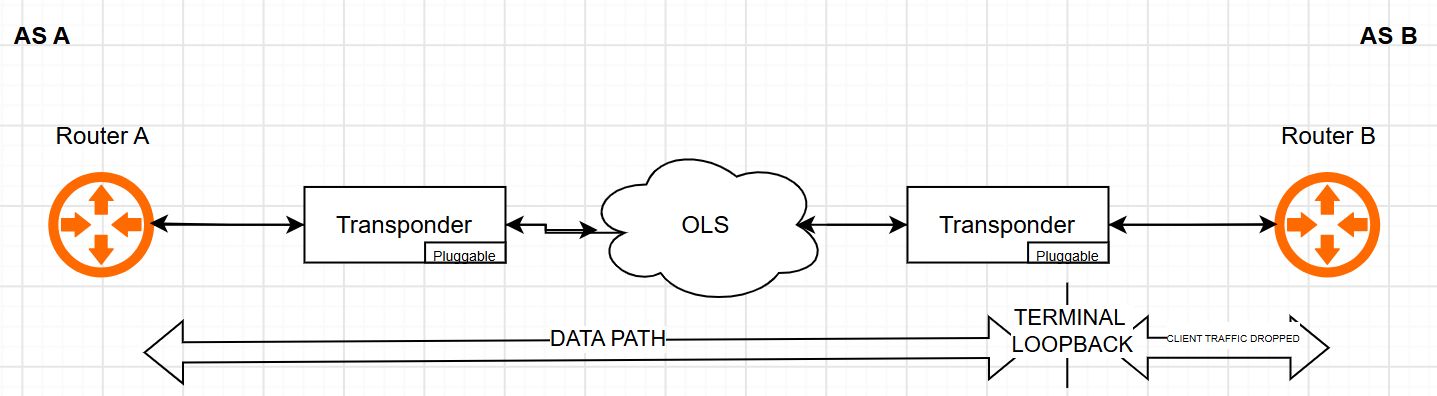
Terminal loopback: loops traffic internally
- Usually for line side tests
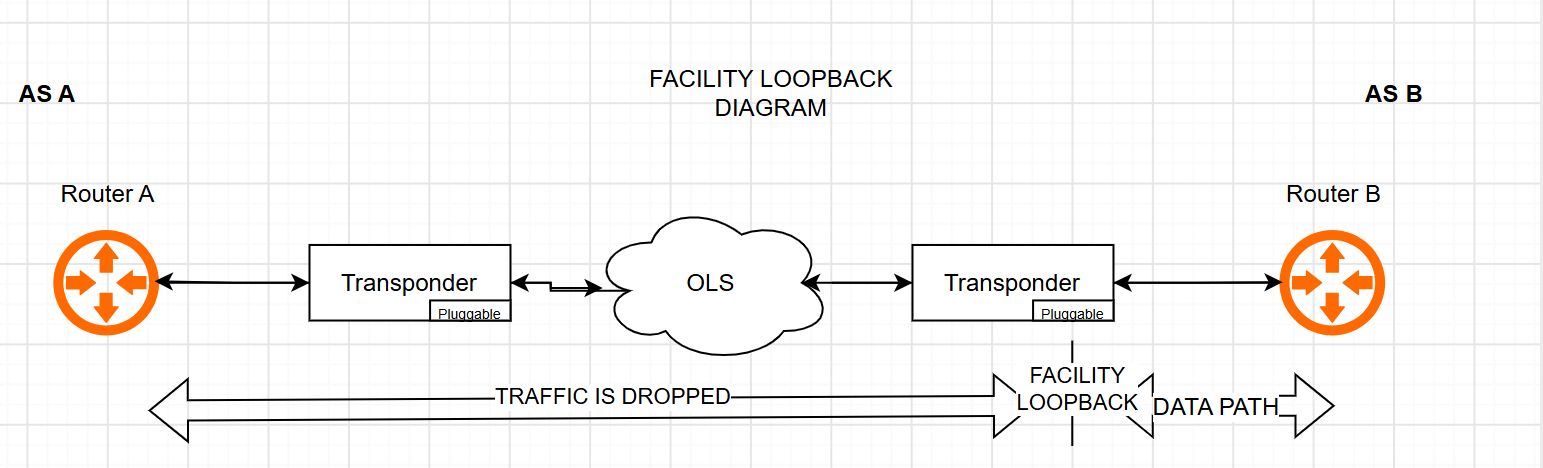
Facility loopback: loops traffic externally
- Usually for client side tests
Terminal Loopback
Use cases/benefits of terminal loopbacks
- Tests the optical transport path (OLS) - lets you send traffic through the OLS/transponders and loop it back before the far-end client/router.
- Isolates potential issues on the far side transponder - useful if you want to independently prove a router on either side
- Validates internal transponder service processing (OTN) - transponder on the external side of the loopback must transport ethernet successfully
Terminal Loopback Diagram
*internal v external: when we say a terminal loopback loops traffic internally we mean that when the light finally hits the far side transponder, it is going through that transponder internally, through the DSP, unpacking the OTN, etc, before it reaches the pluggable*
Facility Loopback
Use cases/benefits of facility loopbacks
- Tests the attached client/device side — loops Router B’s signal back toward Router B.
- Isolates the transport network — helps determine whether the problem is between the router and transponder rather than deeper in the OLS.
- Quickly verifies local optics/fiber/PHY — useful for checking the client pluggable, patching, and router-facing physical link without involving the rest of the circuit.
Facility loopback diagram
Discussion
Comments